Overview of Wasabi:
Wasabi (Wasabia japonica), commonly known by its scientific name of Wasabia japonica, is a perennial plant indigenous to Japan that is widely cultivated for its pungent rhizomes – more commonly referred to by its name “wasabi.” Wasabi belongs to the Brassicaceae family along with cabbage, mustard, and broccoli. Wasabi has become immensely popular due to its spicy taste, making it widely used across cuisines worldwide; particularly popularly used as part of Japanese dishes that combine heat and aroma; making it an essential addition for sushi and sashimi dishes alike!
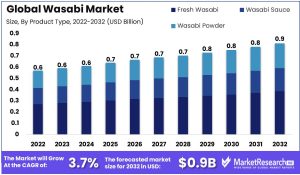
Global Wasabi Market size is expected to be worth around USD 0.9 Bn by 2032 from USD 0.6 Bn in 2022, growing at a CAGR of 3.7% during the forecast period from 2023 to 2032.
Driving Factors:
The growing global appetite for unique flavors in culinary has facilitated wasabi’s cultivation and market expansion. Its distinctive flavor sets it apart from other spicy condiments, enticing chefs, food enthusiasts, and consumers searching for new tastes and experiences to experiment with. Furthermore, an increase in interest in traditional and regional cuisines like Japanese food has increased the demand for authentic wasabi.
Key Market Segments
By Product Type Analysis
- Fresh Wasabi
- Wasabi Sauce
- Wasabi Powder
By Application Analysis
- Food and Beverages
- Medical
- Nutraceuticals
Present Trends:
Today, the culinary world is witnessing an increase in “culinary tourism” – or exploring global flavors and traditional cuisine – through which individuals explore global flavors. This has increased the demand for authentic ingredients like wasabi. Furthermore, health-conscious consumers may seek its potential health benefits, such as antimicrobial properties or antioxidant content.
Top Key Players in the Wasabi Market
- Kinjirushi Wasabi Co Ltd.
- Oregon Coast Wasabi and Frog Eyes Wasabi
- Pacific Coast Wasabi
- Real Wasabi, LLC
- S&B Foods Inc.
- The Wasabi Company
Recent Developments in Wasabi Production:
Recent advancements in wasabi cultivation techniques outside Japan include efforts to replicate native growing conditions, leading to increased production. Furthermore, research on potential health benefits associated with compounds found in wasabi, such as isothiocyanates, has spurred increased interest in its medicinal applications.
Regional Analysis:
Many regions around the world have attempted to cultivate wasabi for its economic and culinary significance, though these attempts have met with various degrees of success. Climate, humidity, and water quality factors that mimic its native habitat in Japan determine which locations can most successfully host it; areas like the Pacific Northwest USA, parts of New Zealand, and select European nations have made strides in growing wasabi despite some environmental challenges remaining.
View Related Article: https://bit.ly/3KUsU1Q