The Lost Art of the Saloon Singer
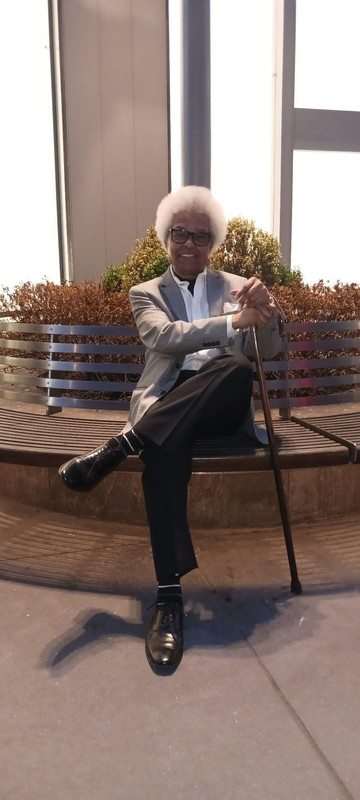
There was a time when the saloon singer occupied a central place in American musical culture. These were the vocalists who worked the intimate rooms, the piano bars, the supper clubs where conversation and music intertwined. They were not concert hall performers projecting to the back row, but rather sophisticated entertainers who could hold a room through subtle phrasing, knowing wit, and an ability to make each listener feel personally addressed. By the 1970s, as musical tastes shifted and economic pressures transformed urban nightlife, this tradition seemed to be fading into history. JaRon K. Eames set out to prove that it could be revived, sustained, and even exported to new audiences across the Atlantic.
When Eames co-founded JKE Productions Enterprises, Inc. with Norbert Bogner, the stated mission was to revive the art of saloon singing and sustain the tradition of jazz and blues. This was not simply nostalgia for a bygone era, but rather a conviction that the intimate, conversational approach to vocal jazz still had artistic validity and commercial viability. The saloon singing tradition that Eames sought to preserve emphasized lyrical interpretation over vocal pyrotechnics, storytelling over showing off. It required a singer to truly inhabit a song, to find the emotional truth in lyrics that might have been sung thousands of times before, and to deliver that truth with freshness and authenticity.
Eames came to this mission with a background that gave him both the artistic foundation and the worldly perspective to succeed. After attending Southern University for one year, he had relocated to New York City in 1972, choosing practical experience over continued formal education. His work with Japan Airlines beginning in 1973 provided four years of global travel, exposing him to how American jazz was received in international contexts and broadening his understanding of the music’s universal appeal. When he left the airline in 1977 to dedicate himself fully to music, he brought this international perspective to his artistic vision.
The musical collaborations that Eames developed in New York placed him squarely within the jazz tradition he sought to sustain. Working with pianists like Harold Mayburn, Lloyd Mayers, and the legendary Barry Harris meant absorbing the bebop vocabulary and the swing feel that these masters embodied. Collaborating with bassists of the caliber of Earl May, Reggie Workman, Bob Cunningham, and Jamil Nassar provided the rhythmic foundation and harmonic sophistication that elevated his performances beyond simple song styling into genuine jazz artistry. His participation in jam sessions with trumpeter Doc Cheatham connected him directly to the history of jazz, as Cheatham’s career stretched back to the 1920s.
A particularly significant moment in Eames’s New York career came through his performance with Dorothy Donegan at Tavern on the Green. Donegan, a pianistic powerhouse known for her technical brilliance and theatrical presentation, was not easily impressed. Her praise of Eames’s singing carried weight precisely because she had heard the best and had no need to offer false encouragement. This endorsement from a jazz luminary confirmed that Eames had achieved the authenticity he sought, that his approach to saloon singing was not mere imitation but a genuine continuation of the tradition.
Finding an Audience in Berlin
The expansion of Eames’s career to Europe, particularly to Berlin, demonstrated the international appetite for the kind of traditional jazz and blues singing he practiced. With support from his European manager, Margrit Jacobson, Eames brought his style to German audiences hungry for authentic American jazz. The two years he spent based in Berlin represented not just a career opportunity but a cultural exchange, as Eames discovered that the saloon singing tradition he was preserving in New York had an eager and appreciative audience in European clubs.
The Berlin jazz scene that welcomed Eames in the early 1990s was robust and sophisticated. The city had long been a European jazz capital, with a history of presenting both visiting American artists and developing its own homegrown talent. The clubs where Eames performed, venues like Blues Café, Lowmeyers, Champussy, Ewige Lampe, Chez Alex, and Kultur, represented a network of intimate spaces perfectly suited to his approach. These were not large concert halls but rather the European equivalent of the saloon settings that had originally nurtured this style of singing.
His New Year’s Eve 1991 performance at Hotel Sylter Hof and his Black History Month appearance at Bebop in Kreuzberg positioned him as more than just a visiting novelty. These were significant bookings that indicated his acceptance into the Berlin jazz community. His performances at Badensher Hof, Franz Club, and the Wilmersdorfer Jazz Festival further solidified his presence on the scene. The summer 1993 European tour, which included a performance at Freiburg’s famous Blue Monday blues club, expanded his reach beyond Berlin and demonstrated his viability as a touring artist in the European market.
The release and promotion of his first CD, Suddenly, marked a crucial step in documenting and disseminating his artistic vision. When German radio personality Jan Fritz dubbed him the Emperor of Swing, it was recognition not just of his vocal abilities but of his commitment to a particular aesthetic. The title acknowledged that Eames was not trying to modernize or update the swing tradition but rather to embody it fully, to be a living representative of an approach to music that valued elegance, sophistication, and rhythmic vitality.
Eames’s continued presence in Berlin after the initial release of Suddenly, returning to promote the album through radio interviews and performances, showed his understanding that building an international audience required sustained effort. His performances ranged from private gatherings, such as events for the American German Business Club, to public concerts like the gospel performance at Tempelhofer Church. This versatility demonstrated that his skills as an entertainer extended beyond the jazz club setting, that the principles of saloon singing, connection with the audience and emotional authenticity, could translate to various contexts.
Bringing the Tradition Home
When Eames returned to New York in early 1995, he brought with him the validation of European success and the determination to continue promoting his vision of jazz and blues singing. The reception of Suddenly in American publications like Jazz Times, Living Blues, Blue Suede News, and Cadence Jazz Magazine confirmed that there was domestic appreciation for his work as well. These were serious jazz publications with knowledgeable critics, and their positive reviews indicated that Eames was being recognized not as a nostalgic throwback but as a legitimate contemporary practitioner of the jazz vocal tradition.
The 1996 release of Sounds Good to Me represented an artistic evolution. Praised for its masterful phrasing and swing, the album demonstrated that Eames had continued to refine his craft. The phrasing that reviewers noted is one of the essential elements of saloon singing, the ability to bend the rhythm of a melody to serve the emotional content of the lyrics, to rush ahead of the beat or lay back behind it in ways that create tension and release. This is not something that can be taught through formal instruction alone but rather must be absorbed through years of listening, performing, and collaborating with great musicians.
The subsequent recording of JaRon: Caught in the Act, a live album captured in New York City, provided documentation of Eames in his natural habitat. Live recordings capture elements that studio sessions cannot, the interaction with the audience, the spontaneous choices made in the moment, the energy of real-time performance. For a saloon singer, whose art depends so heavily on creating intimate connection with listeners, a live recording offers a truer representation of their artistry than the more controlled environment of the studio.
Eames’s ongoing ParlorJazz series, launched with pianist Ms. Emme Kemp and continuing with pianist Les Kurtz, represents the practical application of his mission to sustain the tradition of jazz and blues. These intimate events recreate the salon atmosphere that gave saloon singing its name, bringing audiences into close proximity with the performers and creating the conditions for the kind of musical magic that only happens in small rooms. The description of this work as continuing the tradition of old-school Black jazz and blues entertainment acknowledges the cultural specificity of what Eames preserves, recognizing that this is not just a musical style but a cultural practice with deep roots in African American artistic expression.
His performances at historic New York jazz venues have woven his story into the fabric of the city’s jazz geography. Appearing at Original Smalls Paradise in Harlem connected him to the legendary history of that neighborhood’s contribution to jazz. Performing at venues like Sweetwaters, Rodney Dangerfield’s, Ruppert’s, the Sheraton Russell Hotel, Cajun Restaurant, Club Elite, and La Belle Époque placed him in the ongoing life of New York’s jazz scene. His 1985 appearance on the Steve Allen Radio Show on WNEW and his work with Michael Wolff, music director for The Arsenio Hall Show and long-time accompanist to Nancy Wilson, brought his artistry to wider audiences.
The career of JaRon Eames demonstrates that artistic traditions need not die simply because cultural fashions change. Through conviction, talent, and persistence, he has kept the art of saloon singing alive, finding audiences in New York and Berlin, in nightclubs and parlors, through recordings and live performances. His work reminds us that some approaches to music possess enduring value, that the intimate connection between singer and listener that defines saloon singing at its best speaks to something fundamental in human experience. In an age of amplified spectacle and digital mediation, Eames continues to offer something increasingly rare: the unadorned human voice, a well-chosen song, and the swing that makes it all come alive.