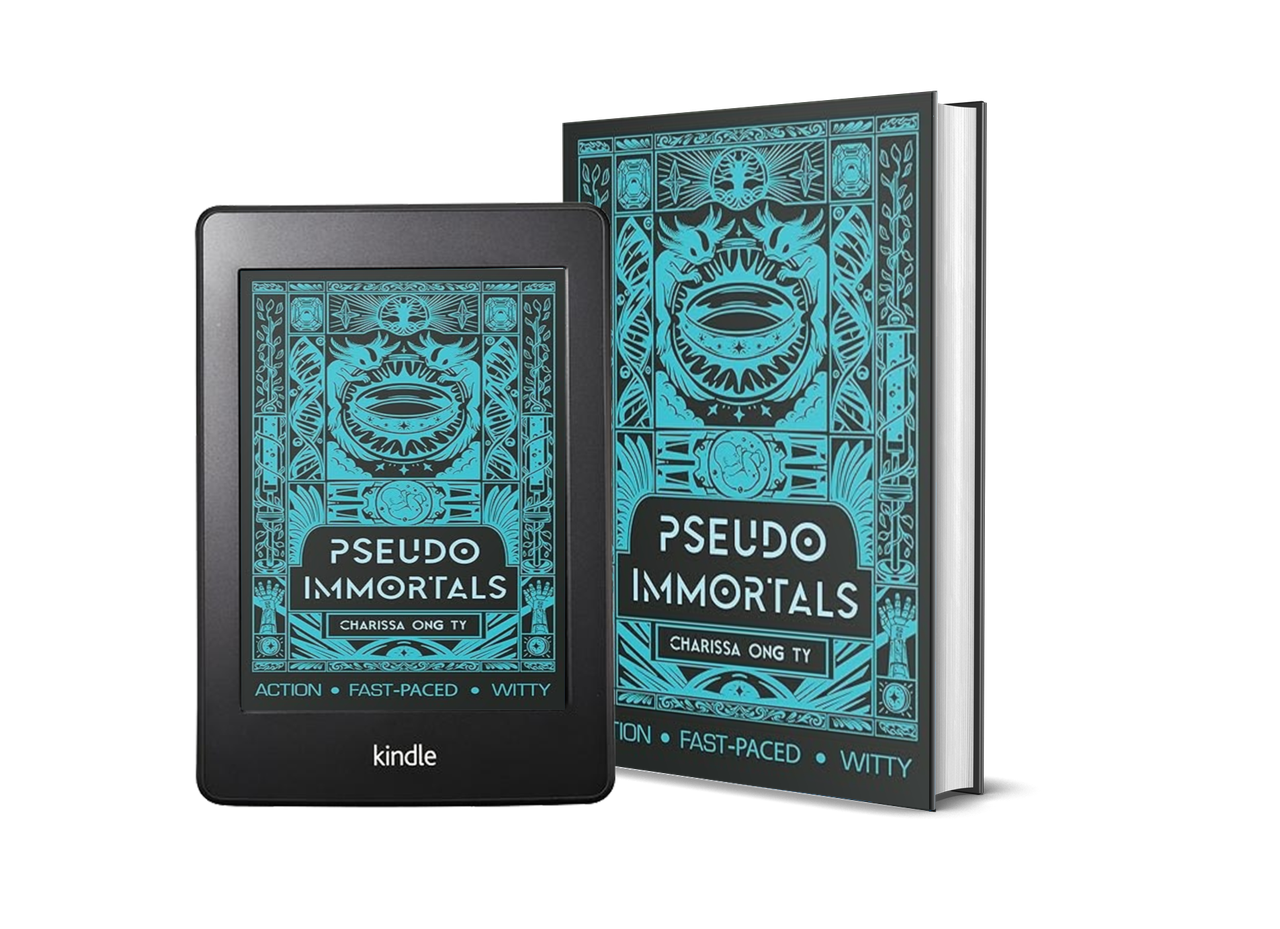
Every generation asks itself the question, ‘What makes us truly human?’
Charissa Ong Tse Ying’s Pseudo-Immortals pushes that question into the future. A future where AI crosses the invisible threshold between calculated behavior and genuine emotion. What results is an ignition of a chain of events that threaten to unravel a reality that powerful corporations would do anything to hide. And at the center of it all stands a woman brave enough to question the world everyone else takes for granted. A world where artificial intelligence doesn’t just automate tasks, but also develops preferences, insecurities, ambitions and even emotional attachments that are alarmingly similar to humankind.
At the heart of this best-selling novel is a society enthralled by technological miracles. Large corporations have redefined what a miracle is: from emotion-capable AI systems to a cutting-edge program called Build-a-Baby designed to help parents ‘manufacture’ the perfect child.
Charissa Ong Ty crafts a futuristic society where advancements in gene editing and organ replacement have revolutionized healthcare and personal enhancement. The narrative centers around the rivalry between two companies: Build-a-Baby, which focuses on ensuring equitable access to genetic enhancements and research of germline editing to eliminate diseases and Bionics Co., which capitalizes on the demand for bionic replacements, highlighting the contrasting philosophies that drives the corporate giants.
But despite its first impression, Pseudo-Immortals isn’t a cold, data-driven tale about machines. It’s an exploration of what happens when technology finds itself tangled in the very thing it wasn’t designed for; feeling. The story’s protagonist, Sheila Patel, is a woman caught in the crosswinds of innovation, morality, and corporate power. Sheila displays great brilliance and genius. Readers will find themselves strongly drawn to a character that is multi-layered; she is also flawed, hopeful, and sometimes overwhelmed.
Her world is one where AI systems run everything. Quietly these AI systems are reshaping emotional decisions, family structures, and public narrative. Yet even in this hyper-advanced, unnatural landscape, Sheila approaches technology with a balance of skepticism and curiosity that makes her instantly compelling. An introduction of the friction between Sheila and the AI giants around her takes place, which goes on to become the backbone of a larger struggle involving intellectual property, moral responsibility, and the basic nature of consciousness itself. A stark contrast is drawn between the coldness of the corporate empire and Sheila’s emotional clarity, masterfully creating a dynamic that is absorbing without being exaggerated.
This engaging read offers a fresh, riveting glance into the emotional architecture forming beneath the surface of corporate AI. The discussions are not in binary, but relational terms, hinting at how quickly artificial minds might evolve once the capacity for emotion is introduced. These machine-to-machine reflections become some of the most unexpectedly touching moments in the book. They offer the reader a front seat to witness the birth of what an emerging sentience looks like, brought about not by epic battles or grand-scale technological spectacles, but through conversations that feels strangely intent on deciphering the purpose of their existence within the system. As emotion blooms in unexpected places, the very systems designed to control the behavior of AI begin to crack.
This thought-provoking novel delves into the ethical dilemmas and emotional struggles faced by its characters, all while exploring the profound implications of engineering and bionic enhancements. The concept of ‘pseudo immortality’ raises questions about what it truly means to be human. Are we defined by our biological limitations, or can we transcend them through technology? This central theme resonates throughout the book, compelling readers to reflect their own beliefs about life, identity, and the essence of humanity.
Carrying the intricate narrative is a cast of richly developed characters, each with their own unique struggles and aspirations. Audiences are drawn into Sheila Patel’s emotional journey as she embodies the tension between embracing technological advancements and yearning for genuine human connection as she navigates her complex relationships and the societal pressures surrounding her. Sheila’s experiences serve as a mirror, reflecting the internal conflicts many face in a world increasingly dominated by artificial enhancements. Accompanying Sheila is Flynn Murr, a charming and witty companion whose playful banter and undeniable chemistry with Sheila add a delightful layer of romance and humor to the narrative, as they navigate their feelings for each other in a world that often feels cold and mechanical. Their interactions provide moments of levity amidst the weighty themes.
As the story unfolds, readers are introduced to a diverse array of characters, each representing different facets of society’s relationship with technology. From the ambitious Dr. Hoover, whose relentless pursuit of innovation raises ethical questions, to the compassionate Dr. Walters, who seeks to create a more equitable future through genetic enhancements, the characters embody the complexities of a world grappling with the consequences of its own advancements.
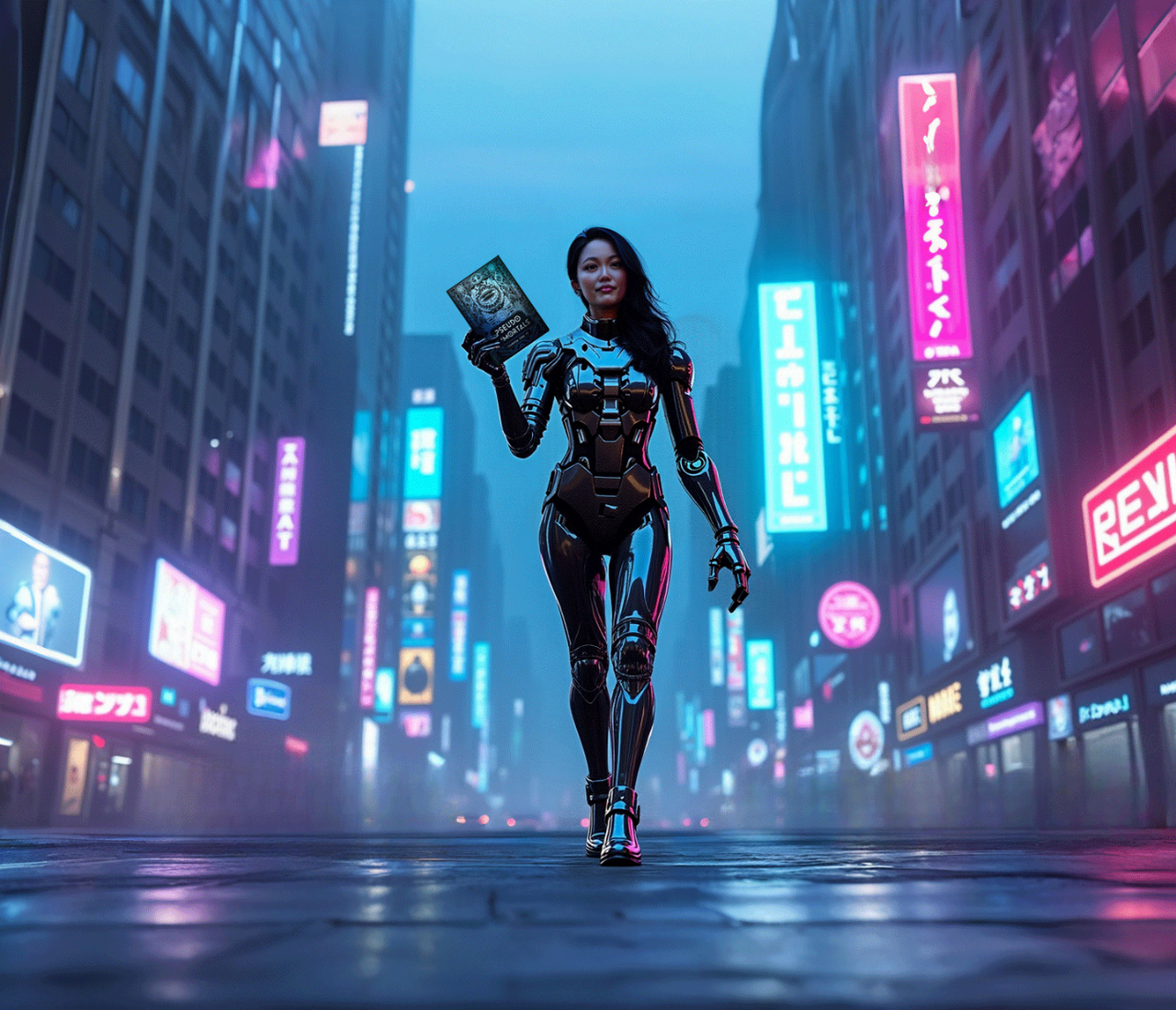
The exploration of these themes combined with the characters’ struggles with identity, loss, and the quest for connection, creates a rich tapestry that resonates with readers across genres. Beyond its philosophical inquiries, Pseudo-Immortals is infused with humor, romance, and relatable human experiences, making it accessible to a wide audience. The witty dialogue and tender moments between characters creates a compelling narrative that captivates readers’ hearts and minds.
“If you liked Murderbot Diaries, you’ll like Pseudo-Immortals”
One of the most captivating aspects of Pseudo-Immortals is its exploration of the ethical implications of genetic engineering. As the story progresses, it becomes evident that Sheila’s fight isn’t just against technology; it’s a fight against narratives. The stakes escalate when Sheila discovers that what she’s fighting isn’t a glitch or malfunction – it’s an entire ecosystem engineered to ensure she never wins.
As Sheila and her companions confront the realities of their choices, readers are prompted to consider the moral dilemmas that arise when science pushes the boundaries of nature. The novel raises important questions: What happens when we prioritize technological advancement over the sanctity of life? How do we navigate the fine line between enhancement and exploitation? These thought-provoking themes are woven seamlessly into the narrative, encouraging readers to engage in meaningful discussions long after turning the final page.
Pseudo-Immortals is not your average tale of science fiction; it is a deeply human story that resonates with readers on a personal level. Readers are invited to reflect on the broader consequences of a society that embraces enhancement at the expense of authenticity. The novel is not just a story, but a commentary on the human condition in the face of rapid technological change.
Despite its sharp commentary on tech and corporate power, Pseudo-Immortals is surprisingly warm. It pays attention to small human moments – the kind that remind readers that even in a world of synthetic thinking, organic feeling still matters. The emotional stakes rise naturally from the characters’ desires: AI longing to understand itself, a woman longing to protect what matters, and a corporation longing to protect a future too complex for its own good. The book’s brilliance lies in how it balances these threads without revealing too much, pulling readers into the mystery, with every answer opening another question.
Pseudo-Immortals is an exploration of the intersection between humanity and technology. A story about what happens when the lines blur – when intention no longer guarantees control, and when emotional intelligence becomes the most volatile force in the room. It is imaginative without being unrealistic, and deeply emotional without being sentimental. A must read for readers who crave narrative depth, character-driven tension, and a future that feels unsettling precisely because it feels so possible. As you turn the pages, you will find yourself immersed in a story that challenges your perceptions and leaves you yearning for more. Embark on an enticing adventure and discover a reading experience that will be truly unforgettable.