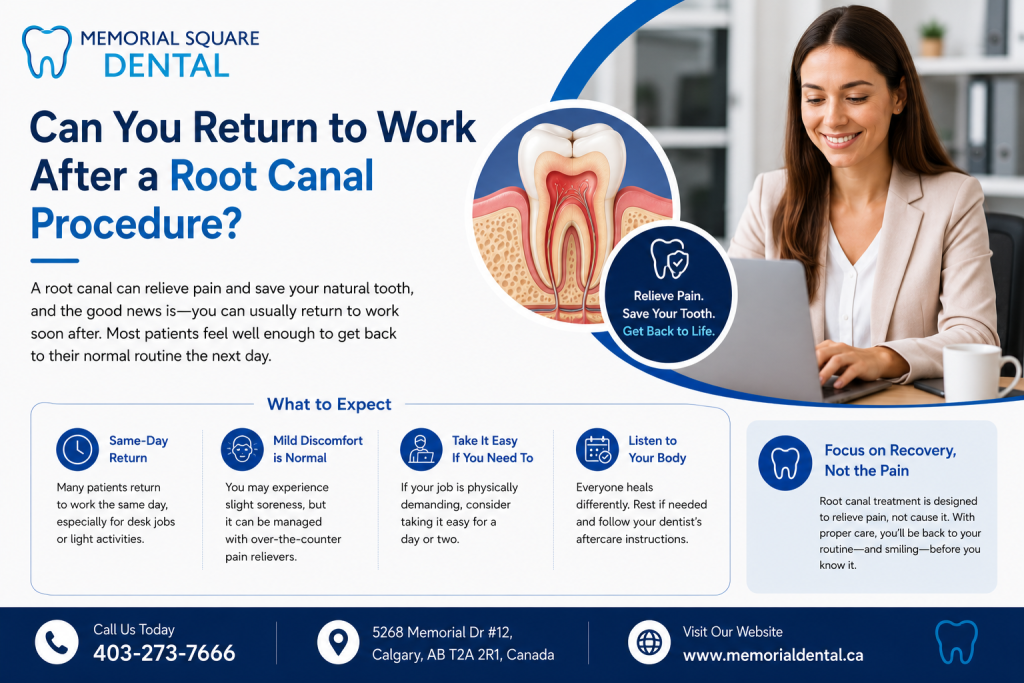
A root canal is a common dental treatment that helps save a tooth affected by deep decay or infection. Although many people feel nervous before the procedure, modern root canal treatment is designed to relieve pain rather than cause it. One of the most common questions patients ask is whether they can go back to work the same day or if they should take time off to recover.
In many cases, patients can return to normal daily activities shortly after treatment. If you’re planning a root canal treatment in NE Calgary, understanding what to expect during recovery can help you plan your schedule and feel more confident. A dentist in NE Calgary can also provide personalized advice based on your specific treatment and overall oral health.
What Happens During a Root Canal?
A root canal removes infected or damaged tissue from inside the tooth. After cleaning and disinfecting the inner chamber, your dentist seals the tooth to help prevent future infection. Depending on the condition of the tooth, a dental crown may be recommended afterward to restore its strength and function.
The procedure is performed using local anesthesia, which keeps the treatment area comfortable throughout the appointment.
Can You Go Back to Work After a Root Canal?
Yes, many people return to work on the same day, especially if they have a desk job or work in a less physically demanding environment. Once the numbness from the local anesthesia wears off, most patients feel well enough to continue with their routine.
However, everyone’s recovery is different. Your dentist may recommend taking the remainder of the day off if your procedure was more complex or if you received additional medication to help you relax during treatment.
When Taking the Rest of the Day Off May Be Helpful
You may benefit from resting at home if:
- Your procedure was lengthy or complex.
- You received dental sedation.
- Your job requires heavy physical activity.
- You are experiencing discomfort after treatment.
- You simply feel tired and prefer to recover.
Giving yourself time to rest may help you feel more comfortable during the first day of healing.
What Can You Expect After the Procedure?
Mild Tenderness
It is normal to experience mild soreness around the treated tooth for a few days. This discomfort often improves with time and can usually be managed using your dentist’s recommendations.
Temporary Numbness
The numbness caused by local anesthesia generally wears off within a few hours. Until normal feeling returns, avoid chewing on the treated side to prevent accidentally biting your cheek or tongue.
Sensitivity While Chewing
The treated tooth may feel slightly sensitive when biting for a short period, especially if there was significant infection before treatment.
Tips for Returning to Work Comfortably
If you decide to return to work after your appointment, these tips may help:
- Wait until the numbness has completely worn off before eating.
- Choose soft foods if your mouth feels tender.
- Stay hydrated throughout the day.
- Avoid chewing directly on the treated tooth.
- Take medications exactly as directed by your dentist.
What Activities Should You Avoid?
For the remainder of the day, your dentist may recommend avoiding:
- Heavy lifting.
- Intense physical exercise.
- Very hot foods or beverages while numb.
- Chewing hard or sticky foods.
- Smoking, if possible.
These precautions help support comfortable healing and reduce unnecessary pressure on the treated tooth.
When Can You Eat Normally?
You can usually eat once the numbness has worn off. Many patients find it more comfortable to choose soft foods during the first day, such as yogurt, soup, scrambled eggs, mashed potatoes, or smoothies.
If your dentist placed a temporary restoration, you may receive additional instructions about which foods to avoid until your permanent restoration is completed.
When Should You Contact Your Dentist?
Although mild discomfort is expected, you should contact your dentist if you experience:
- Severe or worsening pain.
- Significant swelling.
- A fever.
- An allergic reaction to medication.
- A temporary filling that falls out.
- Difficulty biting after treatment.
Prompt evaluation helps address any concerns before they become more serious.
How Can You Support Recovery?
Simple aftercare habits can help your tooth heal properly.
- Brush and floss gently around the treated area.
- Follow your dentist’s instructions carefully.
- Attend any recommended follow-up appointments.
- Return for your permanent crown if one is recommended.
Maintaining regular dental care in Calgary also helps protect your treated tooth and supports long-term oral health.
Why Is It Important to Complete Your Treatment?
After a root canal, many teeth require a permanent crown to restore their strength. Delaying this final step may increase the risk of fractures or additional damage to the tooth.
If you’re looking for a dentist near you, regular follow-up care ensures your treated tooth continues functioning properly for many years.
Conclusion
Most patients can safely return to work after a root canal, especially if their job is not physically demanding. Mild soreness and temporary sensitivity are common, but they usually improve within a few days. Following your dentist’s aftercare instructions and attending follow-up appointments can help ensure a smooth recovery. If you have questions about your treatment or recovery, the experienced team at Memorial Square Dental is here to help. Request an Appointment to receive personalized care and protect your smile with timely root canal treatment.
Frequently Asked Questions
Can I go back to work immediately after a root canal?
Yes. Many people return to work the same day, especially if they have a desk job. However, if you received sedation or have a physically demanding job, your dentist may recommend resting for the remainder of the day.
Will I be in pain after a root canal?
Mild soreness or tenderness is common for a few days after treatment. Most patients find that the discomfort gradually improves as the tooth heals, particularly when following their dentist’s aftercare instructions.
When can I eat after a root canal?
You should wait until the numbness has completely worn off before eating. Soft foods are often the most comfortable choice during the first day, and hard or sticky foods should be avoided if instructed by your dentist.
Can I drive myself home after a root canal?
If your procedure was completed using only local anesthesia, most patients can safely drive themselves home. However, if dental sedation was used, you will need someone to drive you after your appointment.
How long does recovery take after a root canal?
Most patients feel much better within a few days. Mild sensitivity may continue briefly, but complete healing varies depending on the condition of the tooth before treatment and your overall oral health.
Do I always need a crown after a root canal?
Many back teeth require a crown because they experience significant chewing pressure. Your dentist will evaluate the treated tooth and recommend whether a crown is necessary to protect it from future damage.
What should I avoid after a root canal?
Avoid chewing on the treated tooth until advised, wait for the numbness to wear off before eating, and follow your dentist’s instructions regarding physical activity, medications, and oral hygiene for a smooth recovery.