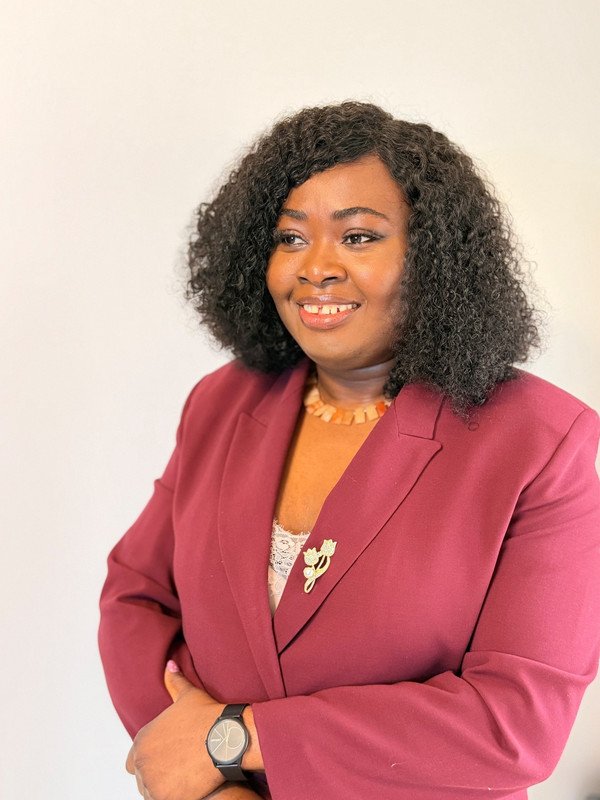
Chinasa Ude Imo’s mother died of complications that earlier, closer care might have caught in time. She was a teacher and an artist who carried a difficult pregnancy alongside diabetes and other conditions that were never managed the way they should have been. Imo was young, and did not yet have the words for what she was watching. Much of what she has done since has been an attempt to make sure fewer families have to watch the same thing — and it is why she eventually founded What About Rural Health?
The persistent invisibility of rural health
Imo comes from Nkporo, a community in Abia State, so the gap she works on has never been an abstraction. Rural communities tend to become visible to the public health world at exactly the wrong moment — once an outbreak has already taken hold. The rest of the time they sit in a kind of blind spot: underserved by health systems, overlooked by the media, and largely absent from the rooms where decisions about their lives get made. Then a virus appears, and the same remote districts no one was watching become the front line. By then the cost of the neglect has already been paid, often in lives that earlier attention would have saved.
This is not an accident. Investment, expertise and attention concentrate in cities, where institutions are dense and visibility is high, while rural areas — dispersed, harder to reach, quieter — slide down the agenda. The danger of that is not just unfairness. Many emerging diseases first appear at the edges, in places where people live closely with animals and where surveillance is thinnest. A blind spot in rural health is therefore a vulnerability for everyone, because what goes unnoticed in a remote village rarely stays there.
The same lesson, outbreak after outbreak
Imo has seen both sides of this. In Sierra Leone during Ebola, the districts where the virus moved most freely were the ones where trust in distant authority was already thin, and where containment measures designed in a capital collided with how people actually lived. Years later, conducting baseline research in Ebonyi State, she sat in focus groups with women of reproductive age in community after community, and the same truth kept surfacing: the system mostly counted them when something had already gone wrong. Cholera tells the same story every time it returns to communities cut off from safe water. COVID-19, which the world imagined as an urban crisis, exposed how thin rural health systems were the moment the pressure finally reached them.
The human infrastructure of resilience
Engaging a rural community well is not the same thing as delivering messages to it. It means listening to local knowledge, working through the figures people already trust, and treating residents as people with agency rather than an audience to be instructed. The networks of trust, leadership and mutual support — what Imo thinks of as the human infrastructure of a place — are what decide whether people accept guidance, report illness, and look after one another when a crisis lands. That infrastructure is as real as any clinic, but it never shows up in a budget or on a map, so it is routinely forgotten. When an outbreak strikes a community whose social fabric is strong, that community can absorb the shock and hold itself together. When the fabric is frayed and outsiders are not trusted, fear and rumour rush into the space where good information should have been. Imo watched exactly that happen in 2014, and has never forgotten how fast it moves.
Surveillance has to reach past the hospital
All of this changes how surveillance should be understood. For a long time it was treated as something that happens inside hospitals, counting the patients who manage to reach a facility. But in rural settings many people never reach one at all, and by the time those who do are counted, an outbreak can already be well advanced. Imo’s own research into the role of the community informant in disease surveillance in Nigeria pointed to a conclusion that has only grown more obvious since: the people best placed to notice that something is wrong are the ones who live there. Community health workers, local leaders and ordinary residents see the unusual fever, the cluster of sick children, the death that does not fit the pattern, long before any of it reaches official statistics. Community-based surveillance turns those people into the first line of detection. It does not replace clinics and laboratories; it reaches the places those systems never quite touch.
What About Rural Health? and the work of closing the gap
Knowing all of this is not the same as acting on it, and closing that gap is exactly why Imo founded What About Rural Health? The distance between what the evidence shows and what actually gets prioritised is enormous, and rural communities keep falling into it. Research on its own does not close that distance; it needs something to carry it across. What About Rural Health? works as a knowledge and media platform, taking findings that would otherwise stay locked inside journals and turning them into conversations that policymakers, practitioners and the public can engage with. Through its podcast, [What About Rural Health?™],] and the rest of its storytelling and partnership work, it tries to put rural and underserved communities at the centre of the conversation rather than have them spoken about from a distance — insisting the people living the reality are the ones describing it.
The cost of ignoring rural communities until an outbreak forces the issue is measured in suffering that did not have to happen and in early action lost over and over again. The alternative asks for commitment more than money: make rural health visible in ordinary times, invest in the relationships and the surveillance that the next crisis will test, and keep rural voices in the room where decisions are made. Outbreaks will keep beginning at the edges — they always have. Whether they are caught early or allowed to grow has very little to do with the virus and almost everything to do with whether anyone was paying attention before it arrived. For Imo, that lesson began with her mother. Her career has been an effort to change the answer.