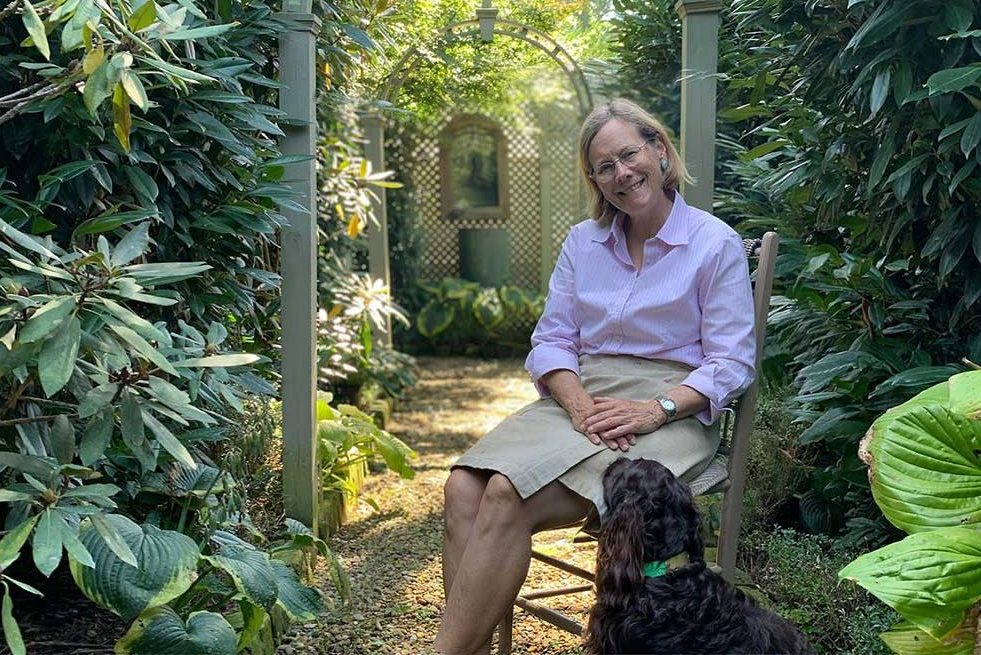
In most design disciplines, time is treated as a constraint. Budgets expire, clients wait, and deadlines press. But in landscape architecture, time is not just a boundary but a part of the material. Plants grow, seasons shift, water finds new paths. The landscape never stays still. It evolves. And those who design with it, rather than against it, understand that patience is not a virtue but a necessity.
This is especially true in the work of Mary Palmer Dargan, a landscape architect whose career has stretched across five decades. Her gardens are not quick to bloom, and they are not meant to be. They are built to mature, to mark time, and to carry memory. In this field, design often chases novelty and Dargan’s approach is rooted in longevity and rhythm.
The Garden as Memory Keeper
Dargan’s gardens do more than provide beauty or function. They hold stories. A curved path remembers a favorite childhood route. A bench placed under a fig tree invites the same afternoon rest year after year. These are not accidental moments. They are part of what Dargan calls “timeless landscape design,” a method that blends spatial planning with human experience.
Her interest in memory goes beyond sentiment. It reflects a belief that landscapes are cultural artifacts. They record decisions, habits, and values. A garden that remains for thirty or forty years speaks differently than one that is redone every five. The plants, the layout, even the way light moves across it over time, all contribute to a kind of living archive.
Dargan has applied this thinking in historic preservation projects across the American South as well as in her studies of British gardens. These projects often involve reading the land not just for what it is, but for what it remembers. The result is not replication of the past, but a design that carries its weight forward.
The Four-Part Master Plan and the Architecture of Maturity
At the core of Dargan’s design philosophy is the Four-Part Master Plan. It organizes the landscape into four zones: arrival, hub, perimeter, and destination. Each part has a different purpose, but together they shape how people move through space and how that movement changes over time.
This structure allows a garden to be built in phases. A family might begin with the hub, the active center of daily life, and then move outward to the quieter zones. In this way, the design grows alongside the people who live in it. It does not require instant completion. Instead, it allows space for evolution, something few design systems accommodate with such grace.
This framework also encourages thinking beyond trends. The goal is not to follow what is current, but to create something that feels inevitable in its place. That quality often emerges only after years of refinement and observation, which is why the Master Plan is not a fixed blueprint but a flexible guide.
Resisting the Culture of Instant Design
The speed of modern life has crept into landscape design in ways that are not always visible. Homeowners often expect results in weeks, developers push for visual impact before plants have time to settle, and television shows package transformations into forty-minute episodes. In the face of this, a design that asks for three or five or ten years to reach its full expression may seem out of step.
Dargan does not argue against efficiency, but she does insist on depth. Her gardens are not meant to impress on first glance. They are meant to last. That difference shows in her plant choices, her use of materials, and in the way her projects allow for natural processes to play out over time.
There is a certain defiance in this approach. It suggests that beauty is not always immediate, and that meaning takes time to grow. That kind of thinking runs counter to market logic, but it is essential to ecological and personal sustainability.
Teaching Time Through Design
Dargan’s work as an educator reflects this same commitment. At Clemson University and through her Placemakers Academy, she teaches students and homeowners not just how to design, but how to see. That includes recognizing seasonal cycles, understanding soil changes, and observing how space is used differently by a child and an elder.
She often returns to tools that encourage slowness: watercolor sketching, journaling, and mapping by hand. These practices are not outdated. They are deliberate choices that train attention. By drawing a plant or mapping a tree’s shadow, the designer becomes part of the landscape’s tempo.
This kind of education is not just for professionals. It is for anyone who wants to shape space with care. Dargan believes the homeowner is not just a client, but a steward. And stewardship, unlike management, is built on long-term responsibility.
Landscapes That Outlast Us
What makes a design endure? Is it the layout? The materials? The maintenance? These questions have no easy answer, but Dargan’s work suggests that time itself is the measure. A garden that thrives twenty years after installation, that adapts without losing its identity, that still welcomes and nourishes those who live in it – that is a true measure of success.
Her gardens do not try to outshine nature. They work with it, slowly, faithfully. Over time, they become more than design. They become part of the place.
In this way, landscape architecture becomes a quiet form of legacy building. Not legacy in the sense of reputation, but in the sense of leaving something alive for others to inherit. Something that teaches, that grows, that remembers.
And in that, perhaps, is its deepest value.