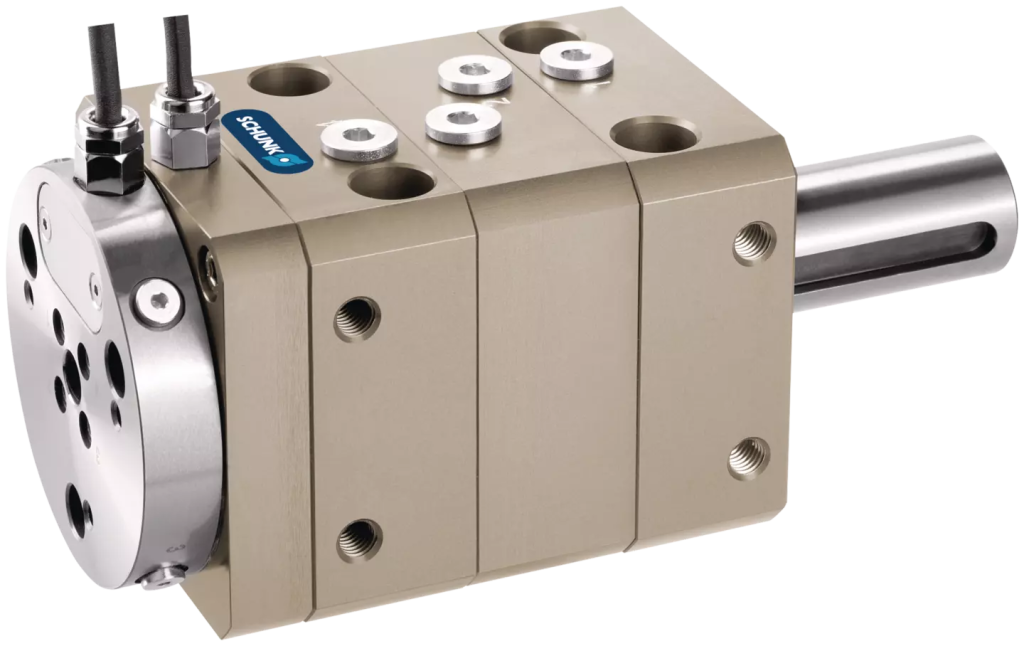
In vacuum technology, precision and reliability are paramount. Whether in scientific research, semiconductor manufacturing, or aerospace applications, maintaining a vacuum environment free from contaminants and leaks is essential for optimal performance. One crucial component that facilitates the transfer of materials or signals across a vacuum chamber while maintaining its integrity is the rotary feedthrough vacuum.
In this article, we delve into the intricacies of rotary feedthroughs and their significance in vacuum systems.
Understanding Rotary Feedthroughs
A rotary feedthrough, also known as a rotary vacuum feedthrough or simply a rotary joint, is a specialized mechanical device designed to transfer rotary motion or signals across a vacuum barrier. It consists of a shaft that passes through a vacuum-sealed chamber wall, allowing rotation without compromising the vacuum integrity.
Rotary feedthroughs are utilized in various applications where continuous rotation or transmission of signals is required across a vacuum environment. These applications range from rotary motion feedthroughs for sample manipulation in scientific experiments to rotary electrical feedthroughs for transmitting power or signals in semiconductor processing equipment.
Key Components and Working Principle
The basic components of a rotary feedthrough vacuum include the shaft, bearings, sealing mechanism, and housing. The shaft is typically made of a durable material such as stainless steel or ceramic and is supported by precision bearings to minimize friction and wear.
The sealing mechanism is crucial for maintaining the vacuum seal while allowing rotation of the shaft. Common sealing methods include elastomer O-rings, ferrofluidic seals, and metal bellows seals, each offering different levels of reliability and performance under varying conditions.
The working principle of a rotary feedthrough involves the rotation of the shaft within the vacuum chamber while maintaining a hermetic seal to prevent air or contaminants from entering the system. This allows for the transfer of rotary motion, electrical signals, or fluids across the vacuum barrier without compromising the integrity of the vacuum environment.
Types of Rotary Feedthroughs
Rotary feedthroughs are available in a variety of configurations to suit different applications and requirements. Some common types include:
1. Mechanical Rotary Feedthroughs: These utilize mechanical bearings and sealing mechanisms to transmit rotary motion across the vacuum barrier. They are suitable for applications where precision and reliability are paramount, such as sample manipulation in scientific instruments.
2. Electrical Rotary Feedthroughs: These incorporate electrical contacts or brushes to transmit power or signals across the vacuum barrier. They are commonly used in semiconductor processing equipment for applications such as wafer rotation or RF signal transmission.
3. Fluid Rotary Feedthroughs: These allow for the transfer of fluids or gases across the vacuum barrier while maintaining a hermetic seal. They find applications in vacuum systems for cooling, lubrication, or gas injection.
4. Hybrid Rotary Feedthroughs: These combine multiple functionalities, such as rotary motion and electrical signal transmission, within a single feedthrough assembly. They offer versatility and space savings in vacuum systems where multiple functions are required.
Applications of Rotary Feedthroughs
The versatility and reliability of rotary feedthroughs make them indispensable components in a wide range of vacuum applications, including:
1. Research and Development: In scientific research laboratories, rotary feedthroughs are used for sample manipulation, positioning stages, and experimental setups requiring controlled rotation within a vacuum environment.
2. Semiconductor Manufacturing: In semiconductor processing equipment, rotary feedthroughs facilitate wafer rotation, RF signal transmission, and other critical functions necessary for device fabrication in a clean, vacuum environment.
3. Aerospace and Aerospace: In aerospace and aerospace applications, rotary feedthroughs play a vital role in systems such as satellite thrusters, reaction control systems, and space telescopes, where precise motion control and reliability are essential.
4. Industrial Processes: In industrial vacuum systems, rotary feedthroughs are employed for tasks such as material handling, coating deposition, and vacuum packaging, where maintaining a controlled environment is critical for product quality and process efficiency.
Challenges and Considerations
While rotary feedthroughs offer numerous benefits, they also present certain challenges and considerations that must be addressed to ensure optimal performance and reliability:
1. Vacuum Compatibility: Rotary feedthroughs must be designed and constructed to withstand the rigors of vacuum environments, including high vacuum levels, temperature variations, and exposure to aggressive gases or chemicals.
2. Seal Integrity: The sealing mechanism of rotary feedthroughs must maintain a hermetic seal under operating conditions to prevent air or contaminants from entering the vacuum system and causing leaks or contamination.
3. Lubrication and Maintenance: Proper lubrication and maintenance are essential for ensuring smooth operation and extending the lifespan of rotary feedthroughs. Lubricants must be compatible with vacuum conditions and applied judiciously to prevent contamination of the vacuum chamber.
4. Load Capacity and Torque Requirements: Rotary feedthroughs must be selected or designed to accommodate the specific load capacity and torque requirements of the intended application. Oversized or undersized feedthroughs can lead to premature wear, decreased performance, or mechanical failure.
Conclusion
In conclusion, rotary feedthroughs are indispensable components in vacuum systems, enabling the transfer of rotary motion, electrical signals, or fluids across vacuum barriers while maintaining hermetic seals. From scientific research laboratories to semiconductor manufacturing facilities and aerospace applications, rotary feedthroughs play a vital role in facilitating precise motion control, signal transmission, and material handling in vacuum environments.
By understanding the principles, types, and applications of SCHUNK rotary feedthroughs, engineers and designers can select or design the most suitable feedthroughs for their specific requirements, ensuring optimal performance, reliability, and efficiency in vacuum systems.